
PVC cable material is a pellet prepared by taking polyvinyl chloride as the base resin, adding plasticizers such as stabilizer, dioctyl phthalate, diisopropyl phthalate, dioctyl terephthalate, trioctyl trimethylene terephthalate, and inorganic fillers such as calcium carbonate, additives and lubricants, etc. through mixing, kneading and extrusion.
PVC cable material is made of polyvinyl chloride as the basic material, and then the stabilizer that can make it not deteriorate, dioctyl phthalate and dodecyl phthalate are added to it, so that it can be formed under professional processing. Finally, the required pellet composition is produced by mixed preparation method. Because of the stabilizer, it also has a good effect in environmental protection and can play a role in protecting the environment.
The quality of PVC cable material is determined by its formula. Only select special materials for environmental protection cables and decompose them through core technical resources.

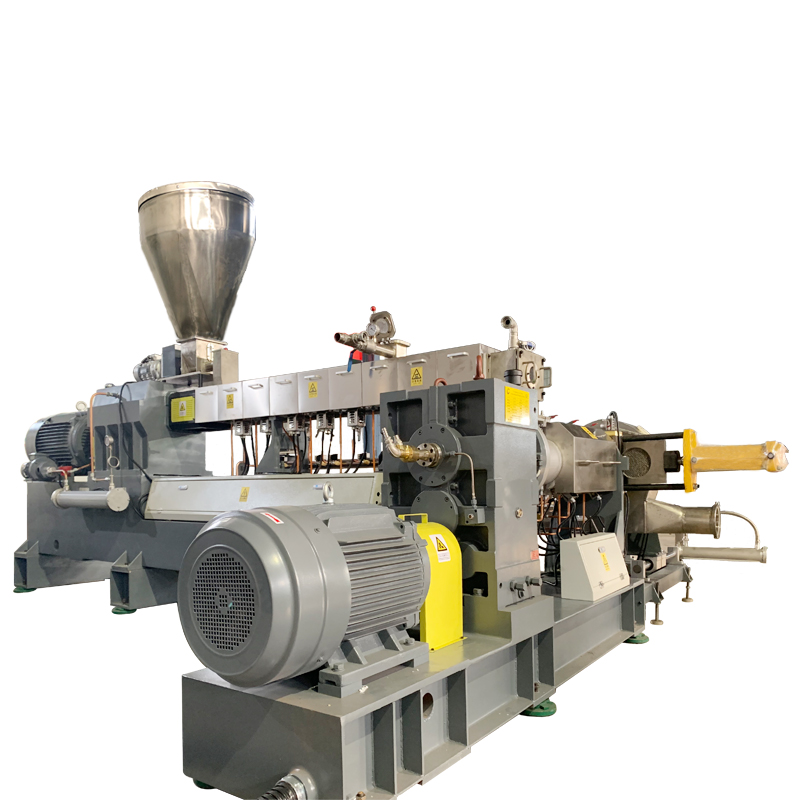
Production process
(1) Production process of single screw extruder:
Raw materials — ingredients — high speed mixer — cooling mixer — single screw extruder — cutting — cooling — screening magnetic separation — metering — packaging.
(2) Production process of double stage extruder:
Raw materials — ingredients — high speed mixer — cooling mixer — twin screw extruder — single screw extruder — cutting — cooling — screening magnetic separation — metering — packaging.
(3) Twin screw extruder production process flow:
Raw materials — ingredients — high speed mixer — cooling mixer — twin screw extruder — cutting — cooling — screening magnetic separation — metering — packaging.
(4) Rolling granulation production process flow:
Raw materials — ingredients — high-speed mixer — internal mixer — double roller mill — cooling — drying — cutting — screening magnetic separation — metering — packaging.
Key points of formula design
- For general sheath grade PVC cable materials, the plasticizer dosage is 0-60phr, the stabilizer is 6-8phr, the lubricant is 1.5-2phr, and the filler is 10-20phr. The plasticizer with poor plasticizing efficiency should be used more; When the amount of filler is large, the amount of plasticizer and lubricant can be larger; When using inactive filler, the amount of plasticizer and lubricant should be larger; Generally, about 5phr cold resistant plasticizer shall be added to the sheath grade cable material;
- For general insulation grade cable materials, the plasticizer dosage is 40-50phr, the stabilizer is 6-8phr, the lubricant is 1-1.5phr, and the filler is about 10phr; The use of plasticizer and lubricant shall refer to sheath grade cable material;
- Plasticizers such as DBP with high volatility cannot be used for cable materials;
- In addition to high temperature resistant plasticizer, the amount of stabilizer shall be increased and 0.3-0.5phr antioxidant shall be added to the high temperature resistant cable material;
- For cable materials with high insulation performance requirements, calcined clay should be used as filler. The plasticizing efficiency of polymer plasticizer is poor, and the amount of plasticizer should be increased as appropriate when formulating the formula;
- When formulating the formula of transparent cable material, plasticizer with good compatibility with resin shall be selected, transparent stabilizer such as organotin shall be directly selected, and the addition amount of lubricant shall be strictly controlled;
- When designing the formulation of flame retardant cable material, it is appropriate to select the composite flame retardant system;
- When formulating the formula of high polymerization cable compound, compound processing modifier should be selected to improve its processing performance;
- Polyester or polymer plasticizers should be selected when formulating the formulation of non migration cable materials;
- When the stabilizer is selected, its dosage is slightly more than that of the stabilizer such as three salts;
- Under the condition of ensuring the normal processing and use of cable materials, the amount of stabilizer shall be reduced as much as possible to prevent «filler effect» caused by excessive amount of stabilizer.


